
Personal Memory
Batur: A Childhood Memory
A boy’s bicycle, an older brother’s generosity, and the long wait for a villager who never returned it. Anas Haqqani remembers the small joys and disappointments of childhood in Waziristan.
© anashaqqani.com
I was still a little boy, too small for my feet to reach the ground when I sat on one of those large Chinese bicycles. But whenever I managed to borrow one, I would slip one leg through the frame to the other side and somehow ride it.
My brother Omar had a bicycle that was slightly smaller than those big ones. Sometimes I would ask to borrow it, and he would let me. For me, that was one of the greatest joys in the world.
One day, Omar said to me, “Can I tell you something? It will make you very happy!”
“Tell me!” I replied.
“My bicycle is yours now,” he said.
I could hardly believe him. I thought he was joking.
“No, I don’t believe you. You’re teasing me!”
“I swear, I’m giving it to you,” he insisted.
I was so happy that I began jumping up and down.
“Now listen,” he continued. “There’s a small problem with the chain. It sometimes slips off. The pedal also needs a little work. Take it to someone in the market and have it repaired.”
I told him that would be easy and thanked him again and again.
That day, Omar had made me feel something wonderful, the kind of happiness only an elder brother can give.
It was almost evening, but I still managed to ride my bicycle around a few times before darkness fell.
That night, I took out the thirty or forty rupees I had saved and got another thirty from my mother.
I could barely sleep. I was simply too excited.
The next morning, I called out to a fellow villager named Batur. He was older than us, around the same age as Omar and the others.
We children were not allowed to go to the market on our own.
I asked him, “Could you take my bicycle to Miranshah Bazaar? Here are a few rupees. Please have it repaired for me.”
He agreed.
“There’s no need to go all the way to Miranshah,” he said. “There are bicycle mechanics nearby in Dargai Mandi. I’ll get it fixed there quickly.”
I handed him my bicycle along with seventy rupees, and Batur left.
I spent the next several hours wandering around the corner of our house. Every few minutes, I would look eagerly towards the bend in the road leading from Dargai.
My imagination was running wild. I pictured myself riding my bicycle, going from place to place and enjoying every moment.
But each time I looked towards that bend in the road, Batur was nowhere to be seen.
Noon came, and there was still no sign of him.
Little by little, my excitement turned into worry, and my worry grew into sadness.
Some of the other children in the family noticed that something was wrong. When I told them what had happened, some burst out laughing, while others became angry with me.
“What have you done?” they said. “Of all the people in the village, you gave your bicycle to Batur? He’s probably sold it already! Don’t you know he’s the village’s notorious troublemaker?”
I tried to defend him.
“No, I don’t think so. He must have been delayed somewhere.”
But my reassurances convinced neither them nor my own heart.
One of the boys said, “Just a few days ago, he sold a donkey belonging to some nomads for three hundred rupees. The village elders had to compensate the nomads afterwards. That man doesn’t care about anything!”
My happiness slowly turned into sorrow.
Afternoon came, and Batur was still missing.
By then, the other children had heard the story, and it had become something of a village joke.
“Anas gave his bicycle to Batur, and now Batur has disappeared!” they laughed.
By evening, I returned home and cried bitterly.
Omar and Hafiz Badruddin Haqqani came to comfort me. They placed their hands on my shoulders and said, “We’ll help you. We’ll buy you another bicycle. Don’t be upset.”
Their words calmed me a little.
But Batur remained missing for an entire week.
A week later, word spread that he had returned and was at home.
Omar led the way, and all of us children went together to Batur’s house. We lined up outside his door.
We stood there for quite some time before he finally appeared.
He was wearing brand-new yellowish clothes, the kind schoolboys used to wear.
Omar immediately asked him, “What did you do with the bicycle?”
Batur was the sort of person who did not hide what he had done.
He laughed and said, “Well, I was completely out of money, so I sold it. I bought myself these new clothes too.”
I asked him, “How much did you sell it for?”
“Two hundred and fifty rupees.”
The pain in my voice must have made it obvious how much I missed my bicycle.
“Oh, may you be ruined!” I exclaimed. “You could at least have sold it for a better price! You sold my bicycle for less than the price of a donkey!”
Batur replied, “Well, your bicycle wasn’t much of a bicycle anyway.”
Omar was laughing uncontrollably.
Then he turned to us and said, “Come on, let’s go. Leave him alone. We won’t say anything more to him. At least he told us the truth.”
Batur added, “Even if you want to beat me, I’m ready. I know I’m the one to blame.”
And so we turned around and went home.
Those days passed, but there were nights when I would still see my lost bicycle in my dreams.
Eventually, I made up my mind: I would buy another bicycle, and this time it would be even better than the first.
At that time, a Chinese bicycle cost three thousand rupees in Miranshah.
Over the course of two months, I managed to save two thousand two hundred rupees.
Another man from our village used to travel to Kabul, buy various goods and bring them back to Miranshah.
He told me that bicycles were cheaper in Kabul.
I counted out my money and handed it to him.
A few weeks later, my bicycle arrived.
The bicycle you see in this photograph is that second bicycle, the one our fellow villager brought me from Kabul.
The photograph was taken in early 2004.
Behind me, on the right, the boy wearing a black turban was named Saifullah. He was my first cousin on my mother’s side.
Saifullah and Omar were classmates.
Later, Saifullah was arrested by American forces and spent several years in prison. After his release, just one month later, he was killed in an American drone strike on the fourth day of Eid.
Standing immediately beside me, with his index finger raised, is Hafiz Asadullah.
He was my paternal aunt’s son and also the son of our maternal uncle Mayawar Khan, who was a cousin of my father.
We studied together in the same classes.
He was also on our football team, and he was an exceptionally powerful hitter in cricket.
As he grew older, he became a remarkably capable and hardworking young man.
A few years later, he too was killed in an American bombing in Paktia. American forces took away his body and poured acid on his face.
At the far end, to my left, the boy standing with an air rifle in his hand is my brother Omar, the same Omar who had given me his bicycle.
Later, he gave me that air rifle as well. I was, and still am, very fond of hunting.
In 2008, Omar was wounded in direct combat. A few days later, he died of his wounds.
This photograph was taken at a small madrasa where we were studying at the time.
And the boy wearing the white turban is me.
Back then, there was a common belief that it was not good to look directly at the camera when having your photograph taken. These days, however, people say that looking straight into the camera makes for a better photograph.
Remembering Family
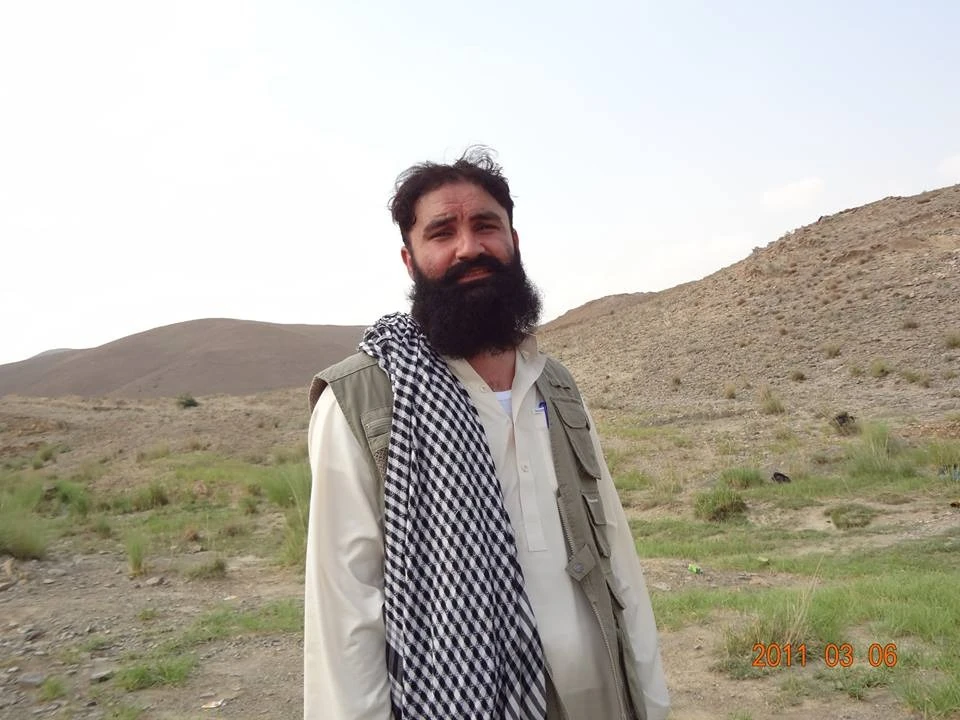
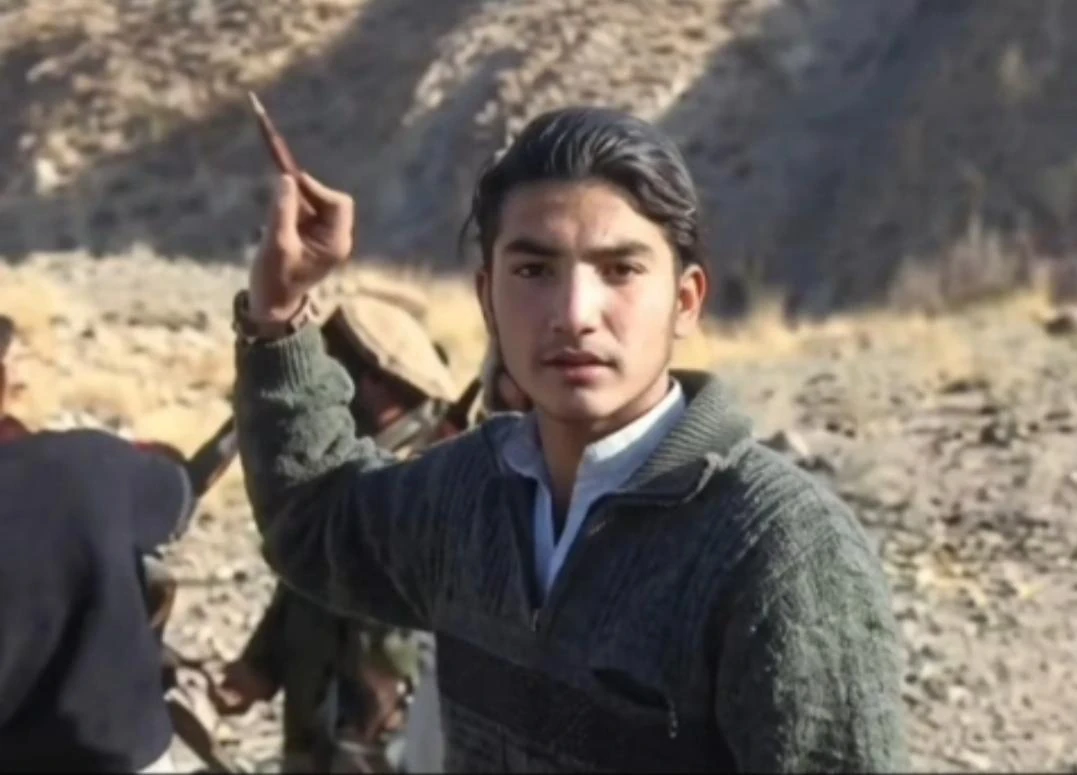
Omar and Badr Uddin Haqqani
Archival photographs remembering Anas Haqqani’s brother Omar and Hafiz Badr Udin Haqqani, who died in 2011.
- Born
- Not publicly documented
- Martyrdom
- 2011
- Born
- Not publicly documented
- Martyrdom
- 2008, from combat wounds